This is Part 2 of a two-part series. Read Part 1: Out From Behind the Desk to catch up.
Last week we hypothesized that AI emptying out the offices might be the best thing to happen to American work in a generation, because it's pushing people back toward real work done for real people. I truly believe that. But I left something out, and that is the subject of this week's blog.
The vision is beautiful. The work is still hard. Passion gets you to the trailhead; staying on the trail is a craft. And it's a craft you already practice, which is exactly why this shift is coming for you too.
Start with what you've got, because you have built something special. You survived. Roughly half of new businesses don't make it five years, and you're still here, which means you've already paid dues the newcomers haven't. You have customers who come back, and customers who send their friends. You have a name people in town actually recognize. You know your business inside and out — which suppliers will let you slide and which won't, what your regulars order before they order it. None of that shows up on a spreadsheet, and none of it can be downloaded. It's the compound interest of showing up for years, and it's the one thing a brand-new competitor can't buy at any price.
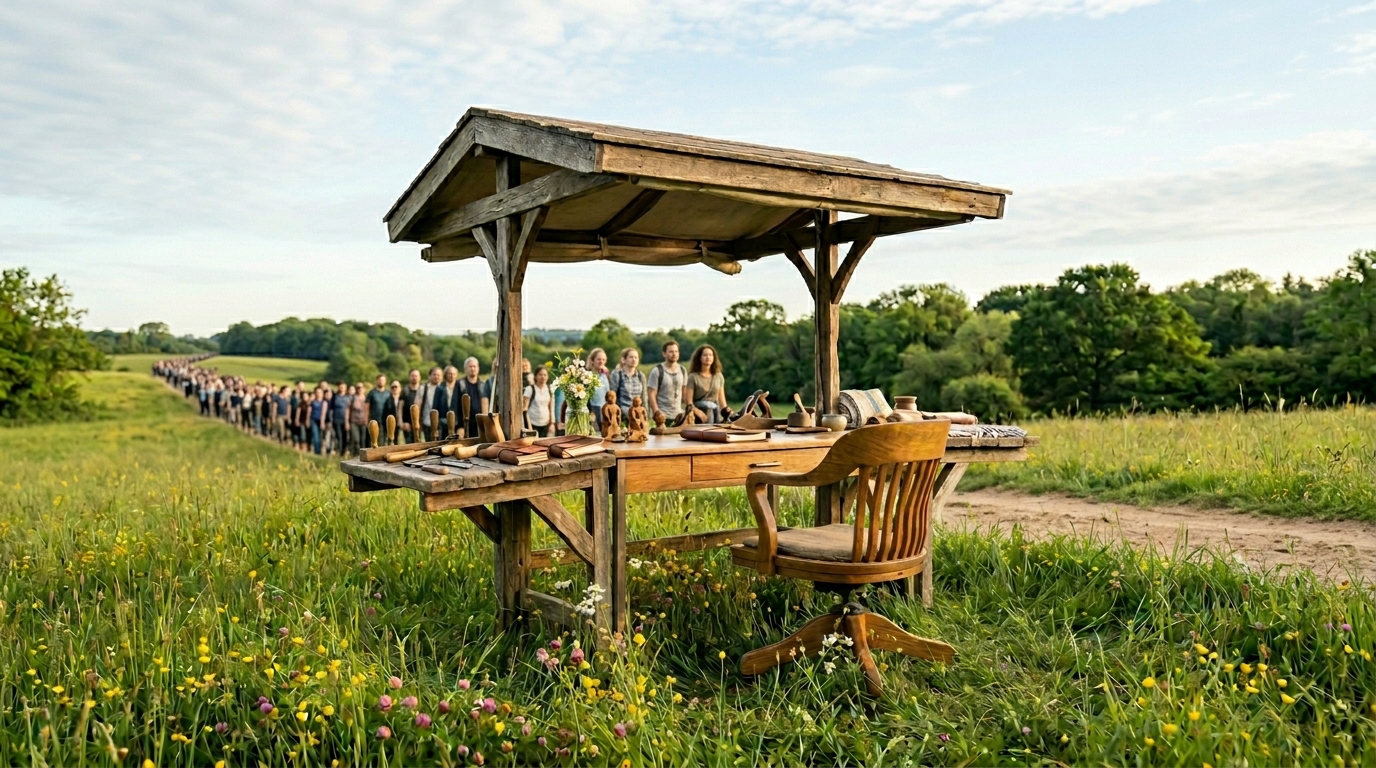
The people coming aren't amateurs, and it's a mistake to picture them that way. A laid-off professional starting fresh has no bad habits to unlearn, no "we've always done it this way," no dead weight. They'll be lean and focused, pointed at one thing they intend to do better than anyone else. You can't out-everything a competitor like that. You can out-specific them, out-relationship them, and out-last them — but only if you're paying attention. A market that's getting more crowded and more capable rewards the owner who stays sharp and quietly punishes the one who drifts. Most businesses don't get beaten. They are victims of their own apathy.
Here is what we all need to be thinking about now, while you still have the luxury of time the newcomers won't:
- Know your numbers cold. Not roughly, not "we're doing fine." Know your margins, your cash flow, which products and services actually make money and which just keep you busy. A lean competitor will be ruthless about this from day one. You should be too.
- Get sharp about what you're actually best at. You can't be everything to everyone, and trying to is how you lose to someone focused. Figure out the thing people genuinely choose you for, and lean all the way into it.
- Tend your relationships. Your regulars, your referral sources, your reputation — that's the moat nobody can dig overnight. Don't take it for granted because it's quiet. Call people. Remember things. Earn their loyalty with every interaction.
- Get the business out of your own head. Write down how things actually run. If everything lives between your ears, you're the single point of failure, and you can't fix, grow, or hand off what you can't see. Systems are a competitive advantage hiding in plain sight.
- Stay curious about what's changing. You don't have to become a technologist. But the owners who poke at the new tools now, in their own work, won't be the ones scrambling in a panic later. Pay attention. Experiment. Stay a student.
- Build in some slack. A cushion. A second revenue line. Not betting the whole thing on one client or one channel. Resilience is boring right up until the day it saves you.
- Make sure the first impression matches the business. Your storefront, your signage, the way you show up when someone looks you up — all of it should say clearly who you are and how seriously you take the work. It's the easiest thing to let slide and one of the first things a customer judges.
Notice that none of this asks you to become someone new, or to chase every shiny thing that scrolls past. It asks the opposite. It asks you to take the business you already built seriously enough to keep it strong while the ground shifts underneath everyone.
The people heading your way are walking toward a life you already know how to live. That's not a threat. It's good company, if you're ready for it. Tighten things up now, while it's a choice and not an emergency, and you won't just survive the crowd that's coming. You'll set the standard they measure themselves against.
A note of disclosure: I spend my days helping small businesses with their digital footprint, so this shift is what I think about for a living, and I'm not a neutral party in any of it. I've been watching this come for the last two years and I want my small business friends to be prepared. — Chris